

Your Commute Could Be Taking A Bigger Toll Than You Think
For millions of people, commuting is simply another unavoidable part of the workday. Whether you're sitting in traffic, squeezing onto a crowded train, or rushing to catch a bus, getting to work can be surprisingly exhausting. Research suggests that how you travel to work, and how long it takes, can affect everything from your mood and sleep to your long-term physical health.

The Hidden Stress Of Getting To Work
A stressful commute can affect your body before you've even arrived at the office. Researchers studying suburban rail commuters traveling into New York City found that longer journeys were associated with higher levels of perceived stress and greater increases in cortisol, a hormone involved in the body's stress response. That means your morning journey might already be putting you under considerable psychological pressure before your workday begins.

Your Body Responds To Stressful Journeys
Traffic jams, missed connections, and unpredictable delays can all make commuting feel frustrating and overwhelming. When your body experiences stress, it activates physiological responses that can temporarily increase your blood pressure and heart rate. According to the American Heart Association, these responses generally settle when the immediate stress passes, although the relationship between chronic stress and long-term blood pressure problems remains under investigation.

Longer Drives May Affect Your Happiness
Spending additional time behind the wheel isn't necessarily good for your psychological well-being. A British study involving nearly 18,000 commuters found that longer driving times were associated with lower psychological well-being, even after researchers accounted for several personal and employment factors. Interestingly, the same research found that walking and using public transportation were associated with better well-being than driving.

Your Morning Commute Can Affect Your Concentration
Ever arrive at work feeling mentally exhausted despite having barely started your day? In a study of 208 suburban rail passengers, researchers found that people with longer commutes showed less persistence when completing a task after their journey. The findings suggest that a demanding commute may influence how mentally prepared you feel when you finally reach your destination.
 Marcos Mesa Sam Wordley, Shutterstock
Crowded Trains Have Their Own Problems
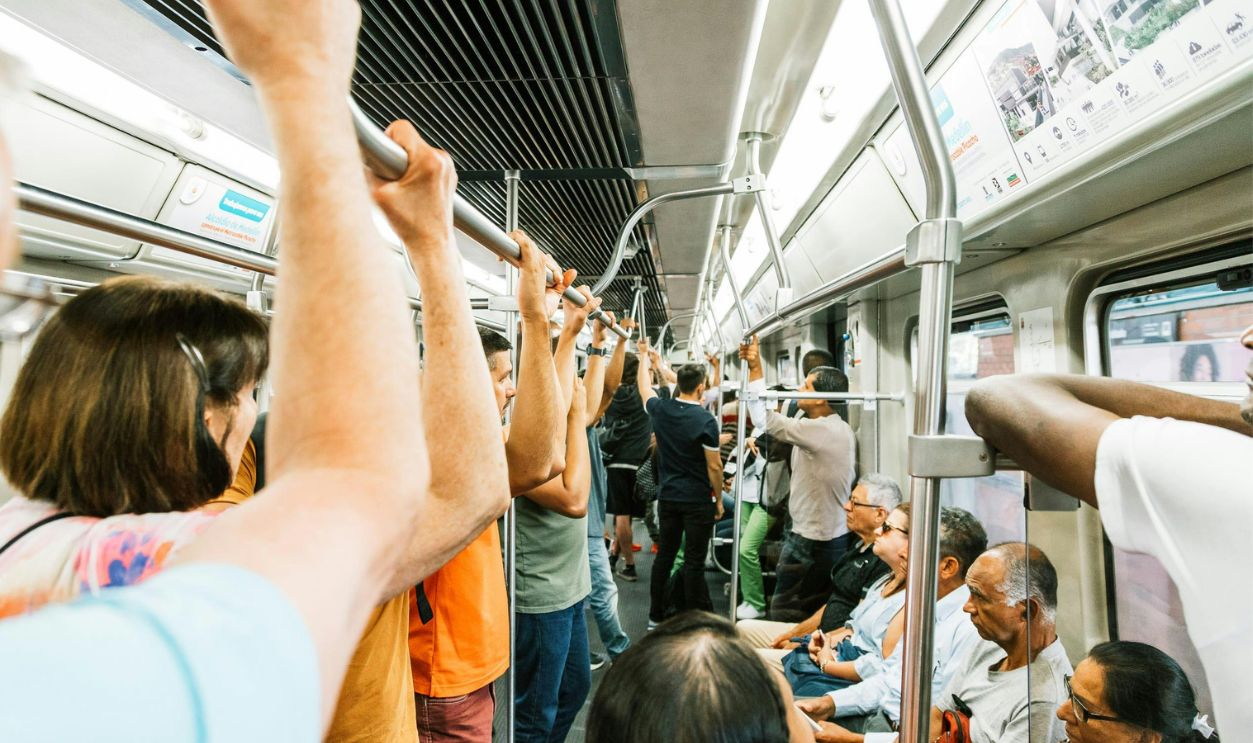
Taking public transportation doesn't automatically eliminate commuting stress. A systematic review examining 47 studies found evidence connecting public transit experiences with perceived stress, cortisol responses, and negative reactions to crowding. Although public transportation can have advantages over driving, uncomfortable and overcrowded journeys may still affect passengers' psychological well-being.
Your Commute May Be Stealing Your Sleep
A long journey to work can leave less time for the activities that help you stay healthy, including getting enough sleep. A Swedish study found that people working more than 40 hours per week had greater odds of experiencing sleep problems when they spent more than five hours commuting each week, compared with periods when their commuting time was shorter. The findings suggest that commuting demands can be especially challenging when combined with an already demanding work schedule.

Early Starts Can Make Things Worse
Some workers need to wake up unusually early just to reach their workplace on time. The CDC's National Institute for Occupational Safety and Health warns that early start times combined with long commutes can make waking up difficult and increase the risk of drowsy driving. This is especially concerning when an early alarm repeatedly cuts into the sleep your body needs.
 Krakenimages.com, Shutterstock
Driving While Tired Is A Serious Risk
Feeling exhausted during your commute isn't just uncomfortable; it can be dangerous. The CDC explains that fatigue can slow reaction times, impair judgment, and cause brief episodes of involuntary sleep known as microsleeps. If you're struggling to stay awake behind the wheel, experts recommend stopping somewhere safe rather than relying on loud music or an open window to keep yourself alert.

All That Sitting Can Add Up
If you drive to work, your commute adds another period of sitting to a day that may already involve spending hours at a desk. The CDC emphasizes that adults who sit less and engage in regular physical activity can gain important health benefits. A long, mostly sedentary commute can make finding time for that movement more challenging, particularly when combined with lengthy working hours.

Your Back Might Be Paying The Price
Spending long periods sitting in a vehicle can be uncomfortable for your lower back. A systematic review and meta-analysis examining sedentary behavior and back pain found associations between prolonged sitting, driving time, and lower back pain. Although the research doesn't establish that every long commute causes back problems, it provides another reason to pay attention to discomfort during extended journeys.

Your Heart Health Could Also Be Affected
The relationship between commuting and cardiovascular health depends partly on how you're getting to work. A Scottish study following more than 82,000 people found that cycling commuters had a lower risk of cardiovascular disease hospitalization than people using non-active transportation. Walking commuters also showed a lower risk, suggesting that incorporating movement into everyday transportation may offer meaningful health advantages.

Traffic Pollution Is Another Hidden Concern
Rush-hour traffic exposes commuters to more than impatient drivers and occasional road rage. Health Canada reports that traffic-related air pollution contains substances such as nitrogen dioxide, particulate matter, and black carbon, with exposure often higher near busy roads and highways. Research has linked traffic-related pollution to serious health problems, including respiratory illness and cardiovascular disease.

Even Sitting Inside Your Car Doesn't Eliminate Exposure
It's easy to assume that being inside a vehicle protects you from the pollution outside. However, Health Canada identifies traveling in vehicles as one of the situations that can increase exposure to traffic-related air pollution. For people who regularly travel along congested highways, pollution is another environmental factor worth considering alongside the stress and inactivity of commuting.

The Noise Around You Matters Too
Car horns, engines, road traffic, and crowded transportation systems can create a surprisingly noisy daily environment. The European Environment Agency reports that long-term exposure to transportation noise is associated with health problems involving sleep, cardiovascular health, and psychological well-being. Not every noisy commute produces these effects, but transportation noise is increasingly recognized as a legitimate public health concern.

Your Commute Could Be Eating Into Your Relationships
A long commute doesn't only affect the person making the journey. Research using American time-use data found that longer automobile commuting was associated with less time spent with certain family members or friends, although the relationships differed between men and women. When traveling consumes a substantial part of the day, it can become harder to protect the social connections that make life enjoyable.

There's Less Time Left For Yourself
The hours spent commuting have to come from somewhere in your daily schedule. Researchers examining commuting and health behaviors have highlighted how working hours and travel demands compete with time available for exercise, sleep, and other activities. Even when the journey itself isn't particularly stressful, its effect on your available free time can be significant.

Walking To Work Could Improve Your Mood
Not every commute has a negative effect on mental health. The British Household Panel Survey study found that people who walked to work reported better psychological well-being than those who drove, after researchers accounted for multiple other factors. The CDC also notes that physical activity can reduce short-term feelings of anxiety, making walking a potentially valuable part of your daily routine.
 LinkedIn Sales Navigator, Pexels
Cycling May Offer Even Bigger Benefits
If your route and circumstances allow it, cycling could offer important physical and mental health advantages. A 2025 study involving more than 240,000 UK Biobank participants found that cycling commuters had lower rates of diagnosed depression and anxiety than non-active commuters. These findings are observational, so they don't prove cycling prevents mental illness, but they add to the evidence supporting active transportation.

The Long-Term Findings Are Remarkable
Researchers in Scotland examined health outcomes among more than 82,000 people over an 18-year follow-up period. Compared with non-active commuters, cyclists had lower risks of hospitalization, cardiovascular disease hospitalization, and death from all causes. Walking commuters also experienced several favorable health associations, although the benefits were generally smaller than those observed among cyclists.

Active Commuters May Take Fewer Sick Days
The advantages of cycling to work might also extend to workplace attendance. A study of commuters in Cambridge, England, found that people who maintained cycling as their commuting method reported fewer sick days and better mental well-being than those who didn't cycle. The researchers estimated a difference equivalent to approximately one fewer sickness absence day per year, although the study couldn't establish a definitive causal relationship.

You Don't Have To Cycle The Entire Distance
A walking or cycling commute isn't necessarily an all-or-nothing commitment. The 2025 UK Biobank study found that combining walking or cycling with other transportation methods was associated with lower risks of depression and anxiety compared with non-active commuting. That makes journeys involving walking to a transit stop or cycling part of the way worth considering when a completely active commute isn't practical.

Public Transportation Might Be Better Than Driving
Despite its occasional frustrations, taking a bus or train may offer psychological advantages over driving yourself. The British longitudinal study found that commuters using public transportation reported better psychological well-being than those traveling by car. The results don't mean every bus or train journey is relaxing, but they suggest that leaving the driving to someone else may have benefits for some commuters.

Small Changes Could Make A Difference
You don't necessarily need to change jobs or move closer to work to make your commute healthier. The CDC recommends that adults accumulate at least 150 minutes of moderate-intensity physical activity each week, and that movement can be divided into smaller sessions. Walking for part of your journey, choosing stairs where practical, or incorporating a short walk before heading home can help build activity into a busy schedule.

Protect Your Sleep Before Anything Else
If your commute requires an early start, maintaining adequate sleep should be a priority. The CDC recommends that adults get sufficient sleep and warns that fatigue can affect attention, reaction time, and driving safety. Adjusting your evening routine to allow enough sleep may be more helpful than trying to compensate for exhaustion with another cup of coffee.

Give Yourself A Little More Breathing Room
A commute becomes particularly frustrating when every unexpected delay threatens to make you late. Since research connects commuting duration and stressful travel experiences with psychological strain, reducing avoidable time pressure is a reasonable strategy to consider. Checking service updates, planning alternative routes, and allowing a realistic travel buffer may make the journey feel more manageable, even if they can't eliminate delays altogether.

Consider Whether Your Work Schedule Can Change
Sometimes the most effective improvement involves changing how frequently you need to commute. Researchers studying commuting time and health behaviors have specifically recommended examining work arrangements that reduce travel demands and potentially free up time for sleep and physical activity. Flexible start times, fewer required office days, or occasional remote work could therefore be worth discussing with your employer when those arrangements are possible.

Pay Attention To How Your Commute Makes You Feel
The effects of commuting aren't identical for everyone, and a journey that feels manageable to one person may be exhausting to another. Research suggests that factors such as journey length, transportation method, crowding, physical activity, and working hours all deserve consideration. If you regularly arrive at work stressed or return home exhausted, examining your travel routine could help you identify changes worth making.

A Healthier Commute Starts With Your Priorities
Your journey to work may seem like a small part of your overall lifestyle, but it happens often enough to deserve attention. The strongest evidence suggests that active commuting offers important health advantages, while lengthy, stressful, and sedentary journeys can introduce challenges involving sleep, well-being, and physical activity. You may not be able to eliminate your commute, but making it safer, more comfortable, and more active where possible could be a worthwhile investment in your health.

You May Also Like:
30 Activities You Need To Stop Doing After 75
Things Americans Think Are Normal But No One Else Gets
20 Things Gen Z Is Killing Off
Sources: 1, 2, 3, 4, 5, 6, 7, 8, 9, 10, 11, 12, 13, 14, 15, 16, 17